
How Game Fairness Audits Work in Online Casinos
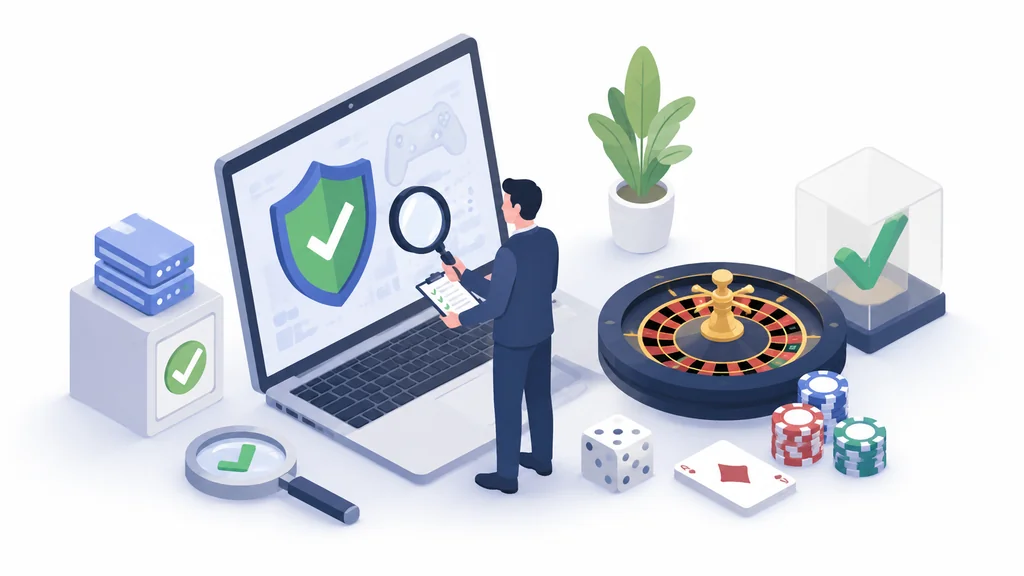
Game fairness audits are independent checks in which a testing lab examines a casino’s random number generator, game rules and payout logic, then issues a report or certificate the operator can publish. The lab tests the software itself, reviews how the games are configured, and sometimes monitors live results over time. The certificate tells you a game was examined by someone other than the casino, and it says nothing about whether you will win.
What a game fairness audit actually covers
A fairness audit starts with the random number generator, the piece of software that produces every spin, shuffle and dice roll. The lab looks at whether the output is statistically consistent with the game’s stated odds, and whether the generator can be predicted or manipulated. A simple illustration of what randomness means here: rolling a cubical die yields a random number from 1 to 6, and a sound generator should produce that kind of spread without a pattern a player could exploit.
The audit also covers the paytable. A slot with a stated return to player has to actually pay out according to that figure over a large sample, so the lab runs a large number of simulated game rounds and compares the results with the theoretical model. Table games get the same treatment, with the added check that the rules shown on screen match the rules the software enforces.
Then there is the plumbing around the game. How does the operator configure bet limits, jackpots and bonus features? Can staff change the odds after launch? An audit that ignores configuration is only half a check, which is why labs ask for change logs and version histories alongside the code.
Who performs these audits
Independent testing laboratories do this work. These are private companies that test casino software for many operators at once, which is what makes them independent of any single casino. A regulator may also require testing as a condition of holding a licence, in which case the lab reports to the regulator as well as the operator.
The word independent carries real weight. If a casino tested its own software and published its own results, the report would be marketing. The value comes from a third party with no stake in the outcome, whose reputation depends on the tests being honest. When you see an audit seal on a casino page, the useful question is which lab issued it and whether the seal links to a current certificate.
Regulators in different markets take different approaches. Some require lab testing before a game goes live. Others rely on the operator to commission audits and publish the results. The specifics vary by jurisdiction, so check the label and your local rules before assuming one standard applies everywhere.

How the testing process runs, step by step
The procedure follows a fairly consistent pattern across labs, though the details differ. Here is the shape of it.
- The operator or software supplier submits the game build, the rules, the paytable and the source code or a controlled access version.
- The lab verifies that the submitted build matches what will go live, using version numbers and checksums.
- The lab runs a large simulation of game rounds and compares the observed return and hit frequency with the stated figures.
- The lab tests the random number generator itself for predictability, seeding problems and bias.
- For live dealer games, the lab reviews the physical equipment, the card shuffling procedure and the camera setup that lets players see the deal.
- The lab issues a report and, if the game passes, a certificate with a validity period.
- The operator publishes the certificate, and the lab may re-test after any software change.
That last point matters more than players realise. A certificate covers a specific version of a game. When the software is updated, the old certificate no longer describes what you are playing, so a serious operator re-tests after material changes.
What the reports and seals tell you, and what they don’t
An audit certificate is evidence of process. It says a qualified third party examined the game and found the output consistent with the stated rules at the time of testing. That is a meaningful claim, and it is a narrow one.
It does not tell you the game is due to pay. Each spin is independent, and past results have no influence on the next one. It does not tell you the house edge is low, only that the edge is what the paytable says it is. And it does not cover the operator’s banking, bonus terms or customer service, which are separate questions.
The history of random number generators shows why the testing matters. A U.S. lottery draw was rigged in 2010, which is the kind of failure an independent audit is designed to catch before players are affected. A generator that passes statistical tests but is seeded predictably, or a draw that is manipulated outside the software, defeats the purpose.
For live dealer games, the audit has a physical dimension. The lab looks at shuffling machines, card security and the procedures dealers follow. Our guide to how live dealer studios prevent collusion between players and dealers covers the operational side of that, and the multi-camera setups that enhance immersion in live dealer games matter here too, because a clear view of the table is part of what makes the deal verifiable.
Random number generators and the standards behind them
Most online casino games do not draw from a physical source. They use a pseudo-random number generator, software that produces a long stream of numbers from a starting seed. The quality of that generator is the foundation of everything else, because a predictable stream makes every paytable figure meaningless.
Generator architecture is not left to chance. PRNG design is mandated in industrial standards such as NIST SP 800-90A, which sets out approved methods for producing random bits. A lab testing a casino game can check the generator against that kind of standard, which gives the audit a fixed reference point instead of a lab’s private opinion.
The seed is the weak point in practice. If the seed is derived from something an attacker can guess, such as the system clock, the whole stream becomes predictable. Auditors therefore look at how the seed is sourced, how often it is refreshed and whether the generator can be influenced from outside. These are the questions that separate a real audit from a logo on a page.
Where audits fit alongside licensing and operator duties
An audit is one layer of a wider system. The licence sets the legal conditions, the lab tests the software, and the operator runs the games day to day. Each layer catches different failures, and none of them replaces the others.
Licensing regimes differ in how much testing they demand and how publicly they share results. Our comparison of how PAGCOR licensing differs from Curacao licensing looks at two approaches to that question. The practical takeaway for a player is to check which regulator stands behind the casino and whether the audit seals on the site come from a lab you can look up.
Operators also carry duties the audit cannot perform for them. They have to keep the tested version live, report material changes, and handle player complaints about game outcomes. When a dispute arises, the audit trail is what lets an operator show that the game behaved as certified.

Common mistakes players make with audit seals
The first mistake is treating a seal as a prediction. A certified game can still take your money over a session, because the house edge is built into the paytable and the certificate confirms it rather than removing it.
The second is not checking the scope. A seal might cover the slot portfolio but not the live casino, or cover the software supplier rather than the specific operator. Read what the certificate names before you give it weight.
The third is ignoring dates and versions. An expired certificate, or one issued for a game build the operator no longer runs, tells you less than a current one. The fourth is assuming an audit covers bonus terms and withdrawal rules, which it does not. Those are commercial terms you have to read yourself, and our breakdown of how seasonal tournaments and leaderboards prize pools really work shows how much of a casino’s offer sits outside the game software entirely.
When to ask support for audit information
You can ask a casino’s support team which lab audits its games and where the certificate is published. A well-run operator will point you to the seal or the report. A vague answer is itself information.
Ask for the specific game if your question is about one title, since certificates are often issued per supplier or per game family. If you are comparing two casinos, the presence of a named lab with a current certificate is a reasonable tiebreaker, though it says nothing about payout speed or support quality.
Finally, keep the audit in proportion. It answers one question well, which is whether the game software behaves as described. Everything else about the casino, from licensing to banking, needs its own check.
Game Fairness Audits FAQ
Who pays for a game fairness audit?
The operator or the software supplier usually commissions and pays for the audit, which is why the lab’s independence matters. A lab that depends on repeat business from one supplier has an incentive to be thorough, because its reputation across the industry is its product. Regulators may also require testing as a licence condition, in which case the cost sits with the applicant.
Does a fairness certificate mean a game will pay out?
No. The certificate confirms that the game’s output matches its stated rules and odds over a large sample. It does not change the house edge or make a losing session more likely to turn around, because each round is independent of the last.
How often are casino games re-audited?
There is no single schedule across the industry. Labs issue certificates with validity periods, and operators are expected to re-test after material software changes. The practical check for a player is whether the published certificate is current and whether it names the game version actually running.
Can live dealer games be audited the same way as slots?
The statistical side is similar, but live games add physical checks. Auditors review shuffling equipment, card handling procedures and the camera coverage that lets players see the deal. The randomness comes from the physical cards, so the testing focuses on procedure and equipment.
What should I do if a casino won’t show its audit certificate?
Treat it as a reason to look elsewhere. A licensed operator should be able to name its testing lab and point to a published certificate. If support cannot answer, check the regulator’s public register for the casino’s licence details before depositing anything.