
How Live Dealer Studios Prevent Collusion Between Players and Dealers
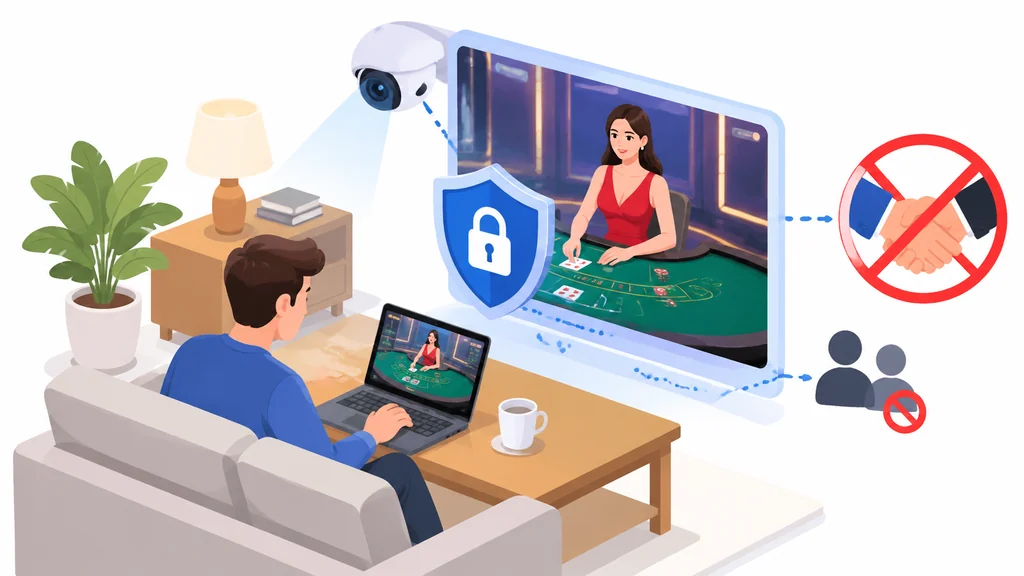
Live dealer collusion prevention works by removing the conditions collusion needs. Those conditions are a predictable card order, an unobserved table, a dealer who stays in one place long enough to build a relationship with a player, and a gap in the record. Studios combine shuffled decks, multi-camera coverage, dealer rotation, floor supervision and stored video so that any irregular pattern can be reviewed after the fact. No single control stops cheating on its own; the point is that a player and a dealer would have to beat several independent systems at once.
What Collusion Between a Player and a Dealer Actually Looks Like
Collusion in a live dealer game is not a hack. It is a relationship. A dealer and a player who know each other can try to turn that relationship into an edge, and the methods are usually subtle and repeatable, with little outward drama.
The classic patterns include:
- Card exposure. A dealer angles a card, lifts a corner, or holds a hand so a specific player can read the value before acting.
- Shuffle signalling. A dealer who controls the shuffle can try to place known cards where they will land for a chosen seat.
- Bet timing. A dealer who slows or speeds a round can give a partner a few extra seconds to change a bet.
- Payout manipulation. A dealer quietly pays a losing hand as a push, or overpays a winning one, hoping the error is small enough to pass.
Each of these needs knowledge of the cards, control of the timing, and no record. A studio that breaks any one of the three makes the scheme unprofitable. That is why live dealer collusion prevention uses several layers of control.
It also helps to separate collusion from other forms of cheating. A player using software to gain an edge is a different problem from a player and a dealer working together. Nevada has treated using a computer to gain a gambling edge as illegal since 1985. Collusion between two people inside the room is handled through physical and procedural controls.

The Card and Shuffle Controls That Remove the Opportunity
The first layer is the deck itself. If nobody at the table knows the order of the cards, exposure and signalling lose most of their value.
Studios use several approaches, often together:
- Pre-shuffled or machine-shuffled decks. Cards arrive in a known state and are randomised by equipment rather than by hand, so the dealer never has a usable mental map of the order.
- Continuous shuffling machines. On games that allow them, cards return to the machine after each round, which limits how far ahead anyone can plan.
- Sealed deck handling. A fresh deck is opened on camera, and the seal and wrapper are shown to the stream before play begins.
- Card values announced and displayed. The system reads or the dealer calls each card, so the on-screen record matches the physical one.
The history here is instructive. In 1999, security researchers at Cigital found that the online poker software used by Planet Poker and other sites did not shuffle cards adequately. A cheater who knew the server time approximately could exploit the flaw, because the algorithm allowed for only around 200,000 possible shuffles. That is a small enough space to search, and it is exactly the kind of weakness a live studio avoids by keeping the randomisation physical and the deck out of any one person’s hands.
For live games, the practical result is that a dealer who wants to help a player has to do it in real time, in front of cameras, with cards they did not choose. That is a much harder problem than knowing the next card.
Cameras, Angles and the Record Everything Leaves Behind
The second layer is observation. A live table is one of the most heavily filmed environments in gaming, and the coverage is deliberate.
Studios typically run several views at once. An overhead camera reads the layout and the cards. A dealer-facing camera captures hands, chip movements and facial expression. Side angles cover the shoe, the discard tray and the drop box. Some rooms add a dedicated camera on the card shoe itself. The result is that a hand movement that looks innocent from one angle is often obvious from another.
Multi-camera setups do more than make a game look good. The same angles that create immersion for the player also create evidence for the review team, so studios use them as both production features and security tools. If you want to understand how those views are arranged and why they matter, the breakdown of how multi-camera setups enhance immersion in live dealer games covers the production side in detail.
The cameras support two practical controls.
- Video is stored, not just streamed. A round can be pulled up later and reviewed frame by frame, which means a scheme has to survive scrutiny it cannot see coming.
- The record is independent of the dealer. Floor staff, the game control system and the camera feed all log the same round, so a dealer cannot quietly change what happened.
This is where the audit trail matters most. A single unusual round proves little. A pattern of unusual rounds on the same table, at the same hours, with the same seat occupied, is what turns a suspicion into a case. The camera record is what makes that pattern visible.
Dealer Rotation, Supervision and the Human Controls
Technology alone does not stop collusion, because the scheme involves people. The human controls are what close the gap between what a camera sees and what a person intends.
The main ones:
- Dealer rotation. Dealers move between tables and between shifts on a schedule. A player who wants a specific dealer at a specific table cannot rely on that pairing lasting.
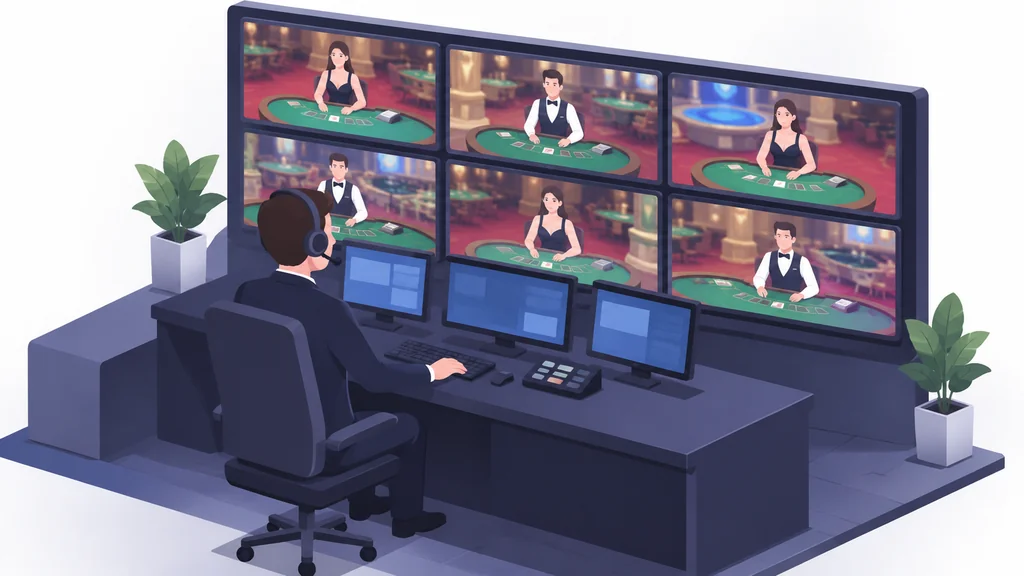
- Floor supervision. A pit or floor supervisor watches the tables in person, and a control room watches the feeds. Two sets of eyes on the same room make a quiet arrangement harder to sustain.
- No personal contact. Studios separate dealers from players by design. There is no private channel, no direct messaging, and chat runs through moderation rather than through the dealer’s own account.
- Hiring standards. Studios apply internal hiring procedures to select staff for live dealer roles.
The separation of dealer and player is the part players notice least and benefit from most. Chat in a live game is public and moderated, which is a social feature and a security feature at the same time. The way live chat and real dealers shape social interaction at online casinos explains how that balance is meant to work. Conversation is part of the product, but it stays inside a channel the studio can see.
Rotation also has a practical limit worth naming. A dealer who is moved constantly is harder to corrupt, but rotation schedules are internal and not published. Readers who want to know how often a given studio rotates staff can consult the operator’s information for a figure.
How Suspicious Play Is Detected and Reviewed
Detection is a process, not a single alarm. Studios and their platform providers look for anomalies in the data first, then confirm them against video.
Review moves from flagging through cross-checking and pattern analysis, then account review and action.
- Flagging. Software watches for unusual patterns, such as a seat that wins far more than its share over a long sample, or repeated bet changes at the last moment.
- Cross-checking. The flagged rounds are matched against the camera record and the game logs to see whether the cards, the timing and the payouts line up.
- Pattern analysis. Reviewers look for repetition, such as the same dealer, the same player, the same table, the same shift.
- Account review. The player’s history, payment methods and linked accounts are examined for connections to studio staff.
- Action. Depending on the finding, the operator may take measures subject to its terms and applicable rules.
The data and video are kept together, so a reviewer can move from a number to a picture of the round. Reviewers can examine a scheme during play and after the round ends.
The same infrastructure supports the authenticity the player experiences. A studio that can prove a round happened as shown is a studio that can also prove it was not tampered with, and the technologies that create authentic experiences at the best casino online are largely the same ones that make the record trustworthy.
Where Players Fit In and What They Can Check
Players are not passive in this. Most live dealer collusion prevention depends on the game being played in the open, and players are part of that openness.
Players can take several steps.
- Watch the dealer’s hands and the shoe. A dealer who repeatedly angles cards toward one seat is doing something visible.
- Compare the on-screen cards with the announced ones. If the display and the call disagree, that is worth reporting.
- Note the timing. Rounds that consistently slow down for one seat are a pattern, not a coincidence.
- Report through the operator’s channel. Studios log reports, and a report plus video is far more useful than a suspicion alone.
- Keep expectations realistic. A single odd round is usually an error, and errors get corrected. Collusion is a pattern, and patterns take time to establish.
Players can consult the operator’s terms and the rules of the licence it holds for details.
When to Escalate and When to Walk Away
Most disputes in live dealer games are about a misread card, a slow connection or a payout that was corrected. Those are ordinary. A few situations justify escalating.
Escalation is warranted in these situations.
- You see the same seat winning in a way that tracks one dealer’s shifts across many sessions.
- A dealer’s card handling changes noticeably when a particular player is seated.
- Payouts are repeatedly wrong in the same direction on the same table.
- Your report gets no acknowledgement at all, which is a service problem in itself.
Walk away when the operator cannot tell you which licence it holds, or when the studio’s rules are not published anywhere you can read them.

Live Dealer Collusion Prevention FAQ
Can a dealer and a player actually collude in a live game?
It is possible in principle, which is why studios build controls against it. In practice a dealer would need to beat the shuffle, the cameras, the floor supervision, the rotation schedule and the stored record at the same time. Each control is independent, so a scheme that survives one usually fails another.
Do live dealer studios use shuffled or random decks?
Studios generally use pre-shuffled or machine-shuffled decks so that no dealer knows the order of the cards. Some games use continuous shuffling machines that return cards after each round. The exact equipment varies by studio and by game, so check the operator’s game rules for the table you are playing.
How would a player notice something wrong at a live table?
Repeated behavior is more telling than one odd moment. The same seat winning across one dealer’s shifts, cards angled toward one position, or payouts that are consistently wrong in the same direction are the kinds of patterns worth reporting. A one-off misread card is usually just an error.
What happens if a studio finds collusion?
Outcomes depend on the operator’s terms and applicable rules. The review relies on the stored video and the game logs, which is why studios retain the video alongside the game logs. Outcomes are not published, so players usually learn only that their own account was affected.
Is collusion the same as using software to gain an edge?
No. Assisted play with software is a separate category, and Nevada has treated using a computer to gain a gambling edge as illegal since 1985. Collusion between a player and a dealer is an inside-the-room problem, handled with physical controls, supervision and video review rather than with rules aimed at software.